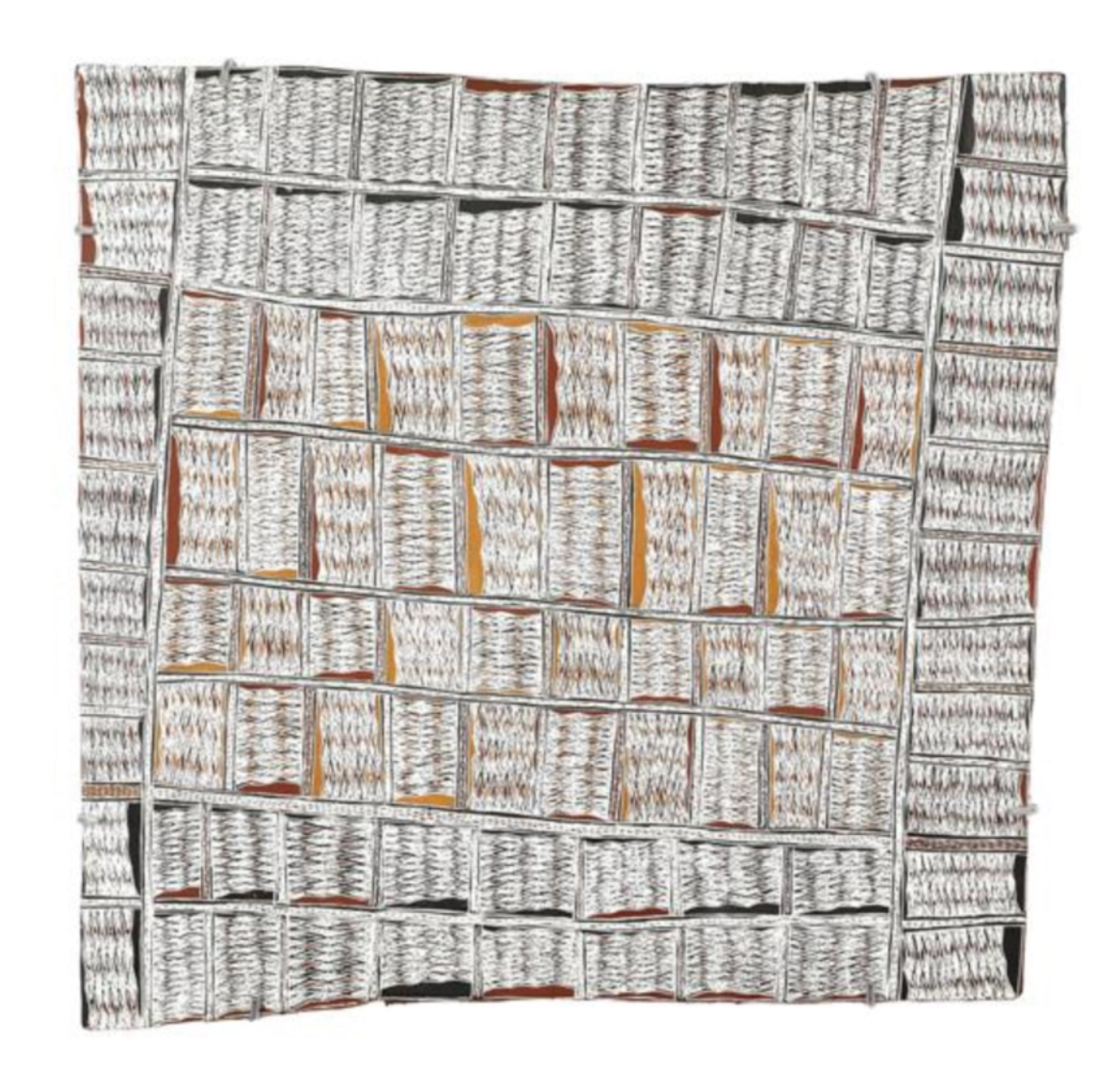
Wunduru Mununggurr

Gurtha, 2026

BARK PAINTING
60 × 60 cm
$4,200
In ancestral mes, the leaders of Yirritja moiety clans used fire for the first me during a ceremony at Ŋalarrwuy in Gumatj country. This came about as fire brought to the Madarrpa clan country by Bäru the ancestral crocodile, spread north and swept through the ceremonial ground. From this ceremonial ground the fire spread further to other sites. Various ancestral animals were affected and reacted in different ways. These animals became sacred totems of the Gumatj people and the areas associated with these events became important sites.The fire spread inland from the ceremonial ground and burnt the nest of Waṉkurra (Bandicoot) forcing him to hide in a hollow log arrakitj to save himself. Waṉkurra is thus danced and sung at mortuary ceremony as he is associated with the burial log used to contain the bones of the deceased. Djirikitj, the quail (sometimes called the fire-making bird), picked up a burning twig from this fire and flew away with it, dropping it at Maṯamaṯa. There is a large paperbark swamp at Maṯamaṯa, where native honey bees live. Fire from the burning twig dropped by Djirikitj took hold of the tall grass in the swamp area and the nave bees fled to Djiliwirri in Gupapuyŋu clan country. Thus Gupapuyŋu honey and Gumatj fire are linked through these ancestral events and also refer to a relationship between these two clans which is played out in ceremony. In the Yirritja songs the small bird Biḏiwidi built its nest high up in the trees safe from the fire- its song was to be heard aer the morning of the fire. Djalpurrkitj is one of the places in the songs of this bird which is the current site of the Gun Club near Nhulunbuy. It is high ground on the Eastern coast that is first struck by the rising sun. The Yolŋu talk of this bird providing the redawn chorus high in the trees. The species is idenfied differently by different Yolŋu. Some cite the Australian yellow whiteeye, Zosterops luteus which gathers in large flocks at the top of trees and sings before the dawn. The Yolŋu dictionary mentions that Biḏiwiḏi is a species of Robin. This is probably a reference to Poecilodras cerviniventris because the head is black with a white eye similar to the other o-menoned candidate the Magpie Lark. The habit of this shy and rare bird—clinging to the side of a tree, scanning the ground for insects, and then flying off quickly—corresponds to the end of the song when the bird abruptly leaves. Its call has been described as ‘a pretty little piping note’ .The indestructible spider Garr came out after the fire had passed and spun its web between the trees which is said to catch the souls of the Yirritja dead. Garrtjambal the kangaroo was as frightened as Waṉkurra and ran away from the fire burning his feet in the hot ash as he did so. Waṉkurra traveled through the hollow log with its tail on fire transferring the Gumatj identy to new places. The harbinger of death is Ŋerrk, sulphur crested white cockatoo who is inmately associated with this place, these people and this ceremony. Another powerful Gumatj bird is Djilawurr whose sites are oen associated with freshwater rainforest adjacent to the harbours of Macassans. Gamata, a sea grass is a manifestation of fire on the seabed; the ribbons of grass sway like flames. Dugongs feed on this seagrass. These creatures are all associated with named sites which were burnt as the ancestral fire spread across the land. Where the sites described occur outside Gumatj clan country, the path of the fire represents important relationships held between these clans. The Gumatj clan design associated with these events, a diamond design, represents fire; the red flames, the white smoke and ash, the black charcoal and the yellow dust. Also the black skin, yellow fat, white bone and red blood of Gumatj people. Clans owning connected parts of this sequence of ancestral events share variations of this diamond design.

Father is Nganditiku. Wunduru mostly lives between her own homeland of Wandawuy and her son’s homeland of Biranybirany. Her artwork exclusively depicts either of these two estates.

Wunduru was married to important artist and lawman Miniyawany Yunupiŋu for many years. She supported him in art production and assisted with intricate crosshatching on some of his masterpieces.

After his death in 2008 she continued to paint in her won right as well as supporting her son Wanapati who was only 18 at the time. In 2021 Wanapati featured in a groundbreaking exhibition called Murrŋiny – a story of metal from the east. Following her son’s success in the new medium of dremelled metal she has been able to concentrate on producing fine art in her own name.

National Emerging Art Prize