Wedu Marika

Yalaŋbara, 2026

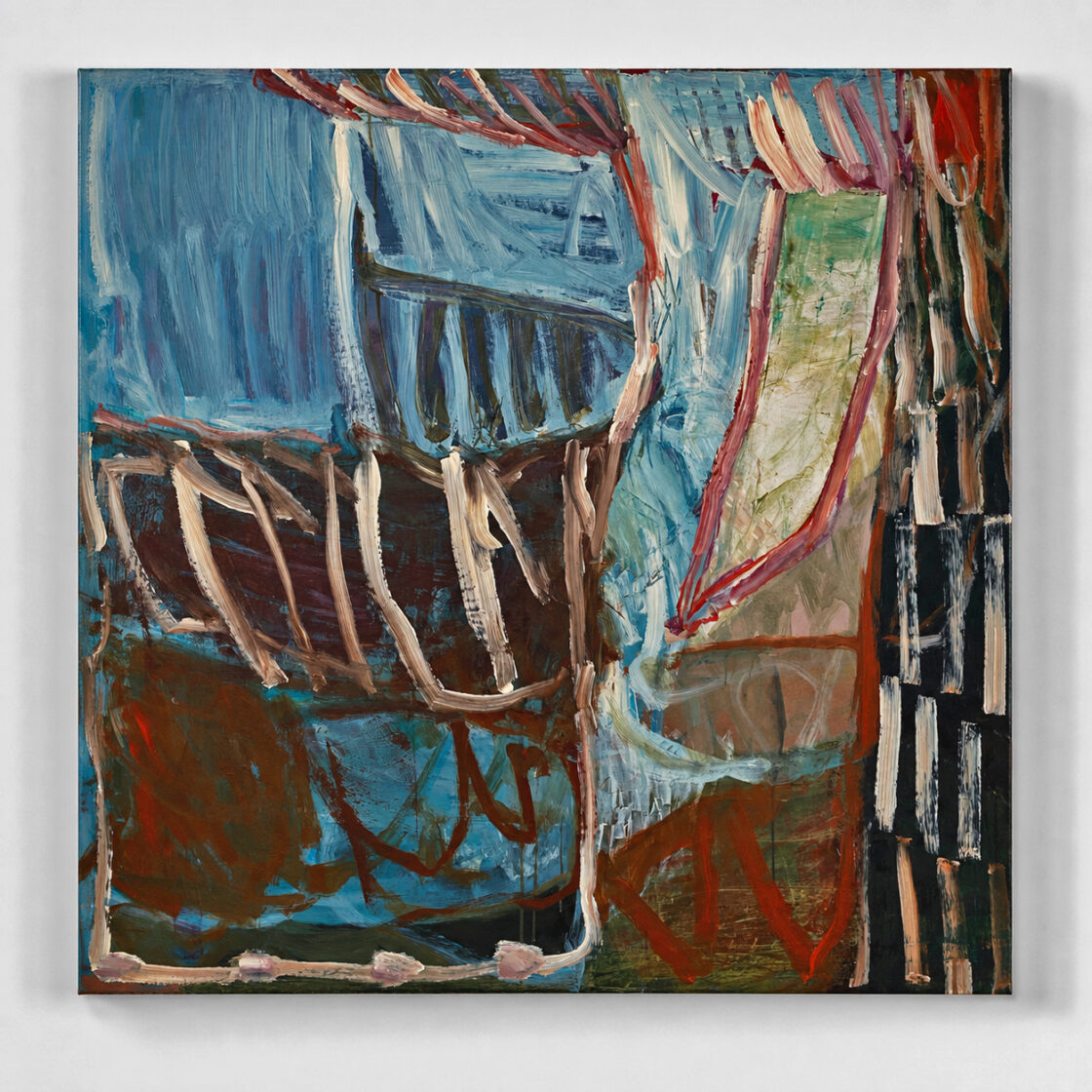
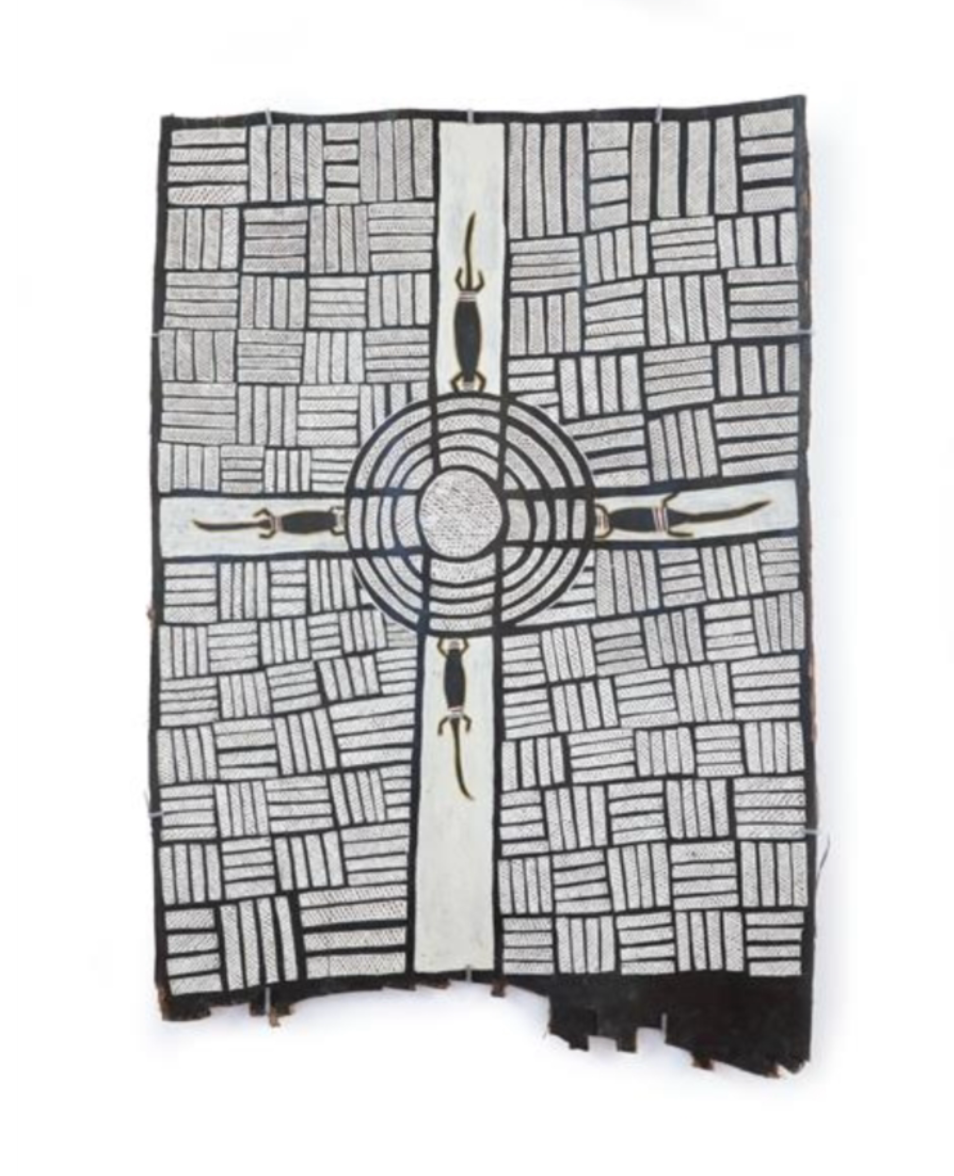
EARTH PIGMENTS ON STRINGYBARK
101.4 × 70.5 cm
$2,500
The songs which found this work’s meaning start as the Djaŋ’kawu Sisters journey from their mythical Atlans-like island Burralku. They arrived in North-East Arnhem land at sunrise. Indeed, the name given to this part of Australia is Miwatj or Morning Side referring to the fact that this is the first part of the Top End to see the morning sun. Matalatj (the elder sister who gives birth later in the story) and Bitjiwurrurru (her younger sister who acts as midwife) have just paddled their canoe a long way and then climbed the sand dunes to where they stop for a rest as the sun rises. The suns rays strike the Buwarta (English name Bustard ) and reflect off the water. As this happens the Sisters sing Buwarta and name it. They do the same as the sun strikes two other important Dhuwa birds related to the Rirratjingu clan , Lindirritj (rainbow lorikeet) and Ŋali (black cockatoo). The Sisters put their paddles down and it turned into the sacred djuta tree from which they hung their ceremonial bathi or sacred dili bags. Gowudalbudal (the male shining flycatcher) who sings the de coming in or going out sat on one of those trees. The work has a representaon of the sacred spring or Milŋurr that the Sisters found that morning. To Dhuwa people this mof represents knowledge. The paern suggests the rippling oulowing waters. A child’s spirit resides in these waters unl it gushes into existence and even then it remains watery for some me. Its fontanelle is a lingering manifestaon of its origin. The songs tell the sister’s name Gudurrku (Brolga) and Baripari (Sacred Ibis). The sun sll rises as goannas drink from Milŋurr and Ŋali hears the crashing of the waves and sees the foam created by the meeting of fresh and salt water. Mangirrikirri the fruitbats are haloed by the rising sun. The Sisters prepare for the first birth, a self-fertilised act of creation. Their white hair, Djawulu, is symbolic of sacred wisdom. The sun has risen on the birth of a naon; the Rirratjingu clan.

My name is Wedu Marika but everyone calls me Phillip. I was born in Yirrkala and I am a Rirratjingu man. I work in Buku-Larrnggay Mulka art centre. I do strapping and wrapping of the barks and larratjki. Sometimes I go to the bush to cut bark for the artists.I enjoy my job alot. On the weekend I like to go hunting with my brothers. I have 4 brothers, I am the youngest one. I have sisters on my fathers side. My mother is Nancy Mununggirritj and my father is Bruno Marika. My great grandfather was Wandjuk Marika. He was a good artist and played yidaki. He was a strong leader.

National Emerging Art Prize